


Exploring My Transylvanian Roots A Journey Through History Nature and Identity

Tracing one’s roots often reveals more than just family stories. It opens a window into a world shaped by centuries of history, rich landscapes, and cultural identity. My journey through Transylvania has been exactly that—a deep dive into a region where every stone, forest, and village tells a story. This post shares my exploration of Transylvania’s history, nature, and the sense of identity that connects me to this unique land.
I never imagined I would write about the place where I took my first breath, but here I am, sharing the story of my life’s beginning. My journey started two score years ago in the arms of the Carpathian Mountains, in a small city Sepsiszntgyorgy in Transylvania (Romania). Though modest in size, this city taught me important lessons about life and the beauty of nature, a gift from the highest creation. Located just 30 kilometers from the old border between Hungary and Romania, this region carries a deep and complex history that shaped my identity as a second-generation Hungarian living in Romania.

Transylvania A Region Marked by History
Transylvania’s history stretches back thousands of years, marked by a blend of cultures and empires. This region has been home to Dacians, Romans, Hungarians, Saxons, and Romanians, each leaving a distinct mark.
Transylvania’s history is fascinating and often turbulent. The region was deeply affected by both World Wars. One of the most significant events was the Treaty of Trianon, signed on June 4, 1920, after World War I. This treaty caused Hungary to lose over two-thirds of its pre-war territory, including parts of Transylvania, which became part of Romania. This shift created a complex cultural and political landscape for the people living there. Including me and my family .
Growing up as a Hungarian in Romania meant adapting to a new language and culture while holding on to my roots. Life was not easy, especially during the communist period of my childhood. Despite the challenges, I am grateful for the experiences that shaped my perspective on the world. The hardships I faced opened my eyes to the realities of life and helped me appreciate the value of resilience and adaptability.
Dacian and Roman Influence
The ancient Dacians inhabited the area before the Roman conquest in 106 AD. Roman forts and roads still dot the landscape, showing the strategic importance of Transylvania in antiquity.
Medieval Fortresses and Saxon Settlements
During the Middle Ages, German Saxons were invited to settle here, building fortified towns like Sibiu and Sighișoara. These towns still preserve their medieval charm and architecture, reflecting a time when Transylvania was a crossroads of trade and culture.
Understanding this layered history helps explain why Transylvania feels like a mosaic of identities rather than a single story.
The Natural Beauty That Defines Transylvania
One of the most striking aspects of my homeland is its natural beauty. The Carpathian Mountains provide a stunning backdrop to the city and surrounding areas. The forests, rivers, and rolling hills offer a peaceful escape and a chance to connect with nature.
During a recent trip back home after traveling through South Asia, I took the opportunity to explore the region as a tourist. Renting a car allowed me to visit several nearby attractions and rediscover the landscapes that shaped my childhood.
Transylvania’s landscapes are as varied as its history. From the towering Carpathian Mountains to rolling hills and dense forests, nature plays a central role in the region’s identity.

Carpathian Mountains
These mountains provide stunning views and are home to some of Europe’s largest populations of brown bears, wolves, and lynx. Hiking trails like those in the Apuseni Mountains offer a chance to experience untouched wilderness.
The Transylvanian Plateau
Fertile lands and traditional villages dot this plateau. It’s a place where agriculture and nature coexist, with fields of sunflowers, orchards, and pastures stretching as far as the eye can see.
Rivers and Lakes
The Olt and Mureș rivers carve valleys that have supported settlements for centuries. Small lakes and natural springs add to the region’s charm and biodiversity.
Spending time in these natural settings helped me connect with the land in a way that history alone could not.
Cultural Identity and Traditions
Transylvania’s identity is deeply tied to its cultural diversity. The coexistence of Romanians, Hungarians, Saxons, and Roma communities has created a rich tapestry of traditions, languages, and customs.
Language and Folklore
Romanian is the dominant language, but Hungarian and German dialects are still spoken in many areas. Folklore includes legends of dragons, witches, and heroes, often tied to specific villages or landmarks.
Festivals and Crafts
Traditional festivals celebrate everything from harvests to religious holidays. Handicrafts like pottery, weaving, and wood carving remain important, preserving skills passed down through generations.
Cuisine
Transylvanian food reflects its multicultural roots. Dishes like sarmale (cabbage rolls), gulyás (a Hungarian stew), and cozonac (sweet bread) showcase a blend of influences.
These cultural elements create a strong sense of belonging and pride among locals and descendants like myself.
Personal Reflections on Identity Discovering Local & Distant Heritage
I realized that identity is not fixed but shaped by the stories we inherit and the experiences we embrace. Transylvania taught me to appreciate complexity and diversity, both in the world and within myself.
Székely Museum


One of my stops was the Székely Museum, which offers a glimpse into the rich cultural heritage of the Székely people, a Hungarian ethnic group living in Transylvania. The museum showcases traditional crafts, costumes, and artifacts that tell the story of this community’s history and way of life. Emília Zathureczky (Mrs. Cserey), a 19th-century Hungarian noblewoman, founded the Székely National Museum (Székely Nemzeti Múzeum) in Sepsiszentgyörgy (Sfântu Gheorghe) in 1875. The museum's initial collection was publicly showcased in September 1875, and she remained its most significant contributor, focusing on ethnographic and cultural items
Reformed fortified church


Nearby, I visited the old Reformed fortified church, a remarkable example of medieval architecture. These fortified churches were built to protect local communities from invasions and stand as symbols of resilience and faith. Walking through the church’s stone walls, I felt a deep connection to my ancestors and the struggles they endured.The current church building largely attained its late Gothic, single-nave structure around 1547 The church was first mentioned in written records in 1332, indicating an earlier, probably medieval, structure was already in place. The surrounding castle wall (vártemplom) was constructed in the 15th–16th centuries to protect against Ottoman and Tatar raids , ( The Tatars are a Turkic-speaking ethnic group associated with the Mongol empire, and Hungarians are a distinct, Finno-Ugric speaking people of Europe.) (NOT the Tartarian Empire)
Peles Castle

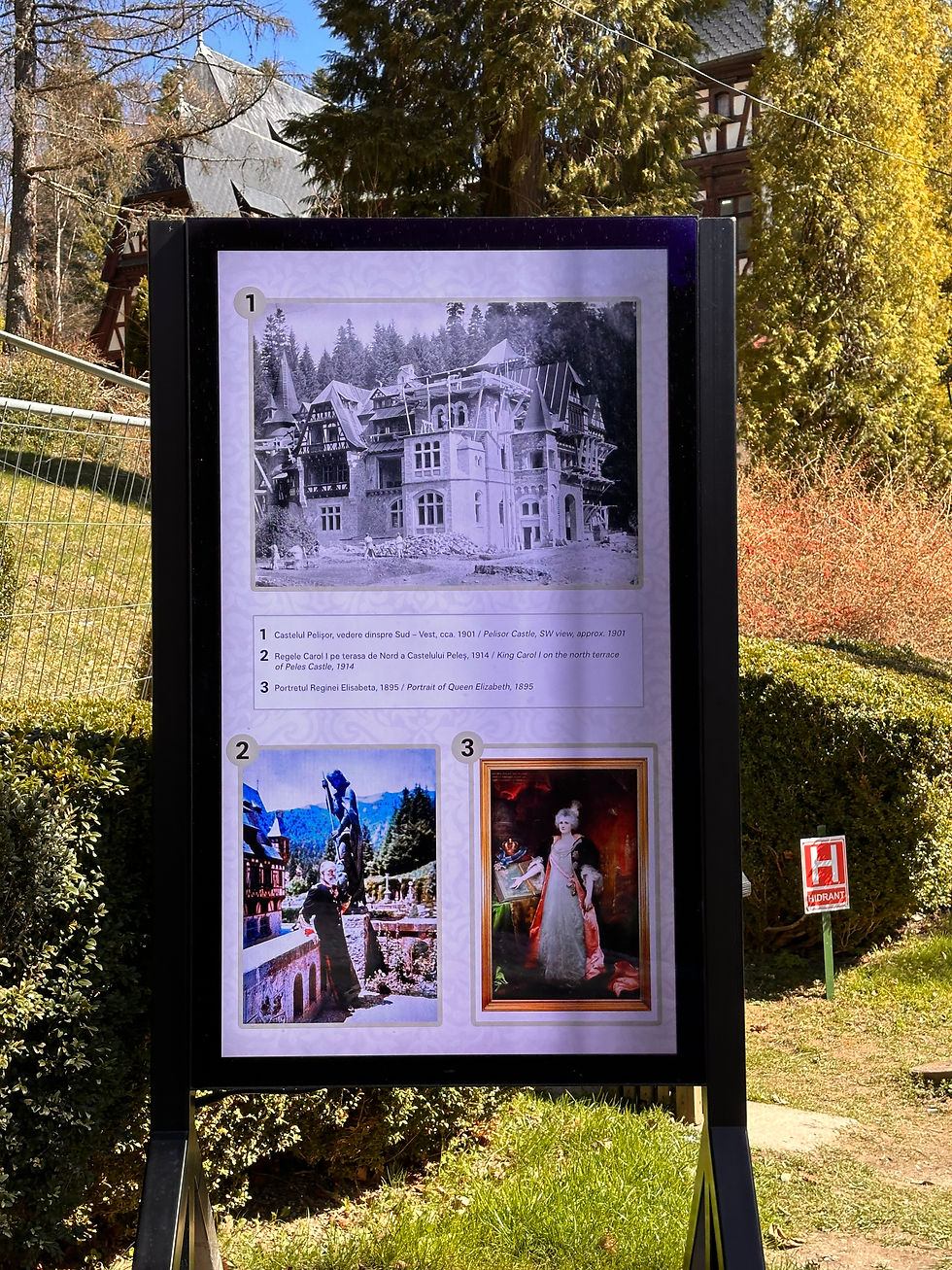


Next was the Peles Castle , (Peleș Castle, located in Sinaia, Romania, is a stunning 19th-century Neo-Renaissance masterpiece built as a summer retreat for King Carol I between 1873 and 1914. Renowned as one of Europe's most beautiful castles, it was the first in the world fully powered by electricity and featured modern amenities like central heating, an elevator, and a 160-room interior packed with 60,000 art objects and themed rooms.Standing within the hushed grandeur of Peleș Castle, I felt a profound connection to a man I never truly knew. In 1940, long after the initial echoes of construction had faded, my grandfather, D. Károly, traveled over a hundred kilometers from home to arrive in Sinaia—a master of his craft entrusted as one of the elite craftsmen chosen to lend his skilled hands to the finishing woodwork of King Carol I’s royal residence. Though he passed when I was only eight months old, as the faint, timeless scent of aged wood filled the air, I felt his presence in every polished surface and intricate curve, knowing that his hands had helped shape the soul of this place.
Sphinx (Bucegi Mountains)


As I stepped out from the cool, wood-scented halls of the castle, my journey took me higher, leaving the artistry of my grandfather behind to ascend into the Bucegi Mountains. The path led me to the plateau at 2,216 meters, where the Sphinx stands in silent, anthropomorphic watch—a monument not carved by an artisan, but by the relentless spirit of the wind itself. From that high, thin air, I looked toward the
, a towering steel beacon standing at 2,291 meters. At that altitude, between the natural mystery of the stone face and the man-made tribute of the cross, I felt the smallness of my own narrative against the grand, enduring soul of the Carpathians. Tamási Áron Theatre The Tamási Áron Theatre, established in 1948 in the heart of Sfântu Gheorghe, stands as a beacon of Hungarian-language culture and one of Transylvania's most prestigious stages. Housed in a historic building dating back to 1856, it bridges the gap between classical tradition and bold, contemporary performance, continuing to honor the spirit of its namesake writer through world-class artistry
Art of the Samurai


While visiting my hometown, I stepped back onto the mats at the Art of the Samurai Sport Klub in Sfântu Gheorghe. It was a powerful moment to reconnect with the club's Sensei, Szőke Attila ,who was my Ju-Jitsu partner when we both began our journeys nearly 30 years ago. Seeing how he has transformed our shared beginnings into a thriving dojo was a profound reminder of how the seeds of discipline we planted as young men have grown into a legacy of strength and character for the next generation.As we stood in the dojo, my mind flashed back two decades to a competition that defined us. I had taken a hit so hard the world turned into a hollow echo; I couldn't hear the crowd, only a dull ringing in my ears. I was on the verge of giving up until I heard his voice cut through the fog: 'It’s up to you! If you stop now, you’re a loser.' The mere thought of losing was enough to snap me back. Despite the concussion of that punch, I stood up, found my footing, and fought my way to victory. Reconnecting with him now, I realize that the strength he helped me find on the mats that day has stayed with me long after the echoes of the fight faded.
Preserving Heritage for Future Generations
The challenge today is to protect Transylvania’s heritage amid modernization and globalization. Efforts to preserve historic sites, support traditional crafts, and maintain natural habitats are vital.
Lessons from My Roots
My journey through Transylvania reminded me of the importance of understanding where we come from. History, culture, and nature all play a role in shaping our identity. For anyone considering a visit to Romania, especially the Transylvanian region, I encourage you to take the time to explore beyond the usual tourist spots. Here, you can experience a unique blend of history and natural beauty that leaves a lasting impression.
The region’s complex past teaches us about the power of adaptation and the strength found in diversity. Nature’s gift, preserved in the Carpathian Mountains and surrounding landscapes, offers a peaceful refuge and a chance to reflect on life’s deeper meanings.
Embracing the Present and Looking Forward
Returning to my roots has been a powerful experience. It reminded me that even though life may bring challenges, our origins provide a foundation of strength and wisdom. The lessons learned in a small Transylvanian city continue to influence how I see the world today.
If you ever find yourself traveling through Romania, take a detour to Transylvania. Explore the museums, visit the fortified churches, and immerse yourself in the natural beauty that defines this region. It’s a journey that offers more than sightseeing—it’s a chance to connect with history, nature, and identity in a meaningful way.

Bicaz Gorge (Békás-szoros) and Red Lake (Gyilkos-tó) offers several unique cabins and guesthouses designed for travelers looking for a rustic, mountain experience. These accommodations are often situated right off the DN12C national road, providing easy access for those driving through the Eastern Carpathians.

Brașov: Home to the Black Church and a vibrant Old Town square. is over 600 years old, with construction beginning in 1383 and finishing in 1477. It is the largest Gothic church in Southeast Europe, representing a key medieval monument in the city center.

Bran Castle: Widely known as "Dracula's Castle," this fortress sits dramatically on a cliff near Brașov.Bran Castle, often associated with the Dracula legend, is over 600 years old. Construction of the current stone fortress began in 1377 after King Louis I of Hungary authorized the Transylvanian Saxons of Brașov to build it, with completion of the structure finalized by 1388.

Viscri: A traditional Saxon village (favored by King Charles III) that offers a glimpse into a centuries-old way of life Szeklerland (Székelyföld): Includes your hometown of Sfântu Gheorghe, famous for its thermal baths, traditional gastronomy Turda Salt Mine (Salina Turda): An incredible underground theme park located 120 meters deep in a historic salt mine. Sibiu: Known for the "eyes" on its rooftops and its rich Germanic heritage.Sibiu, Romania, is a historic city with roots dating back over 800 years, with the first official document mentioning the settlement (as Cibinium) in 1191 AD. Founded by Saxon settlers in the mid-12th century (around 1147), it served as a major, heavily fortified medieval trading hub in Transylvania.

Bicaz Gorge & Red Lake (Lacu Roșu): A dramatic canyon with towering limestone walls and a lake filled with sunken tree trunks. The Transfăgărășan Highway: Often called the "best road in the world," it winds through the high peaks of the Făgăraș Mountains.The Transfăgărășan (DN7C) is a spectacular 90 km paved mountain road in Romania, crossing the Carpathian Mountains with 830+ bridges and tunnels. Renowned as a premier driving road, it features dramatic hairpin turns, steep climbs, and scenery up to 2,042 meters. It is typically open only from June to October due to snow.

Bicajel Gorge (Kis-Békás-szoros): A smaller, quieter gorge nearby with picturesque wooden bridges and waterfalls. A medium-difficulty loop trail takes about 3.5 hours.

Shaping the Soul: A Journey Through Royal Halls, Mountain Peaks, and My Transylvanian Roots
From the royal halls of Sinaia to the high altitutes of the Bucegi, this journey was a bridge between the man my grandfather was and the person I am today. Transylvania isn't just a place on a map; it’s the grain of the wood, the spirit of the samurai, and the silence of the mountains. Until next time, home.


Comments